

In the series production of metal components, the choice of manufacturing process depends on several factors. Part geometry, raw material type, sheet thickness, the cutting, stamping and bending forces required, and the part’s technical requirements, such as tight dimensional and geometrical tolerances, call for a series of operations to achieve the final shape. These factors determine how that sequence is defined. When high production rates and substantial production volumes are also required, defining the process becomes even more important.
It is in this context that stamping and automatic forming should be assessed. More than two technologies available for manufacturing metal components, they offer different ways of developing a process that meets the specific characteristics of each part.
The decision therefore begins long before production. It starts with an analysis of the part, its technical requirements and how these can be translated into a stable, competitive industrial solution.
GEOMETRY IS ONLY THE STARTING POINT FOR THE ANALYSIS
The technical drawing provides an initial understanding of the component, but does not, on its own, reveal the full complexity of its manufacture.
Turning a geometry into a part suitable for series production requires an understanding of how the material must be cut, bent and formed to achieve its final configuration. The number of operations required, their sequence and the relationships between them directly influence tool design and the architecture of the manufacturing process.
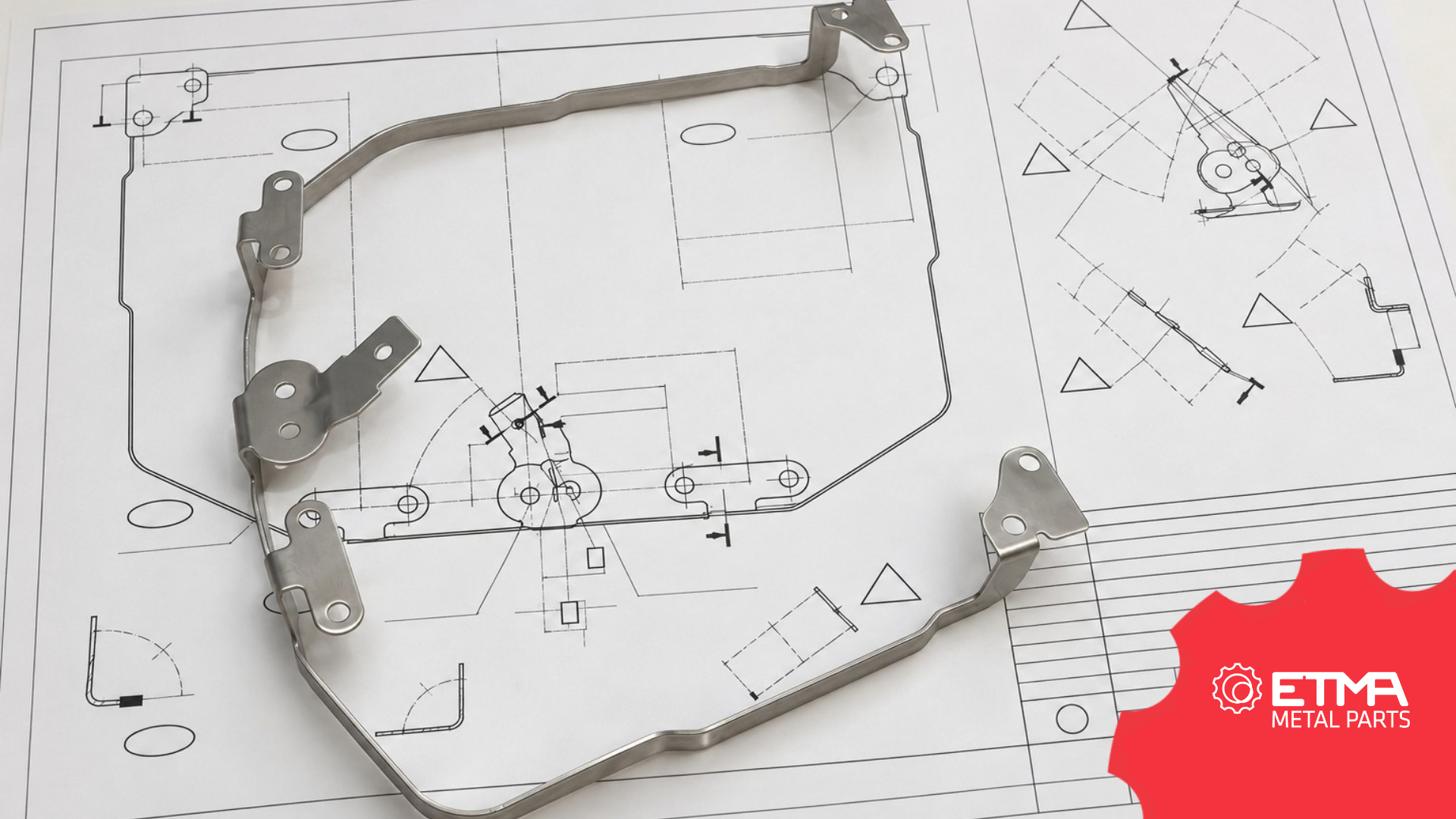
The raw material itself introduces further variables. Material type, thickness and behaviour during deformation must be considered alongside the dimensional and functional tolerances specified for the component. This analysis becomes even more relevant when productivity requirements are introduced: a technically viable solution for a given volume may not be the most suitable when a significantly higher production rate is required, potentially compromising process capability.
The most suitable solution therefore begins to emerge from the combination of geometry, operations, raw material, tolerances, production rate and production volume.
PROGRESSIVE STAMPING: BUILDING THE PART THROUGH THE PROCESS
When the geometry allows the different operations to be arranged in a consecutive sequence, progressive stamping offers a particularly efficient solution for series production.
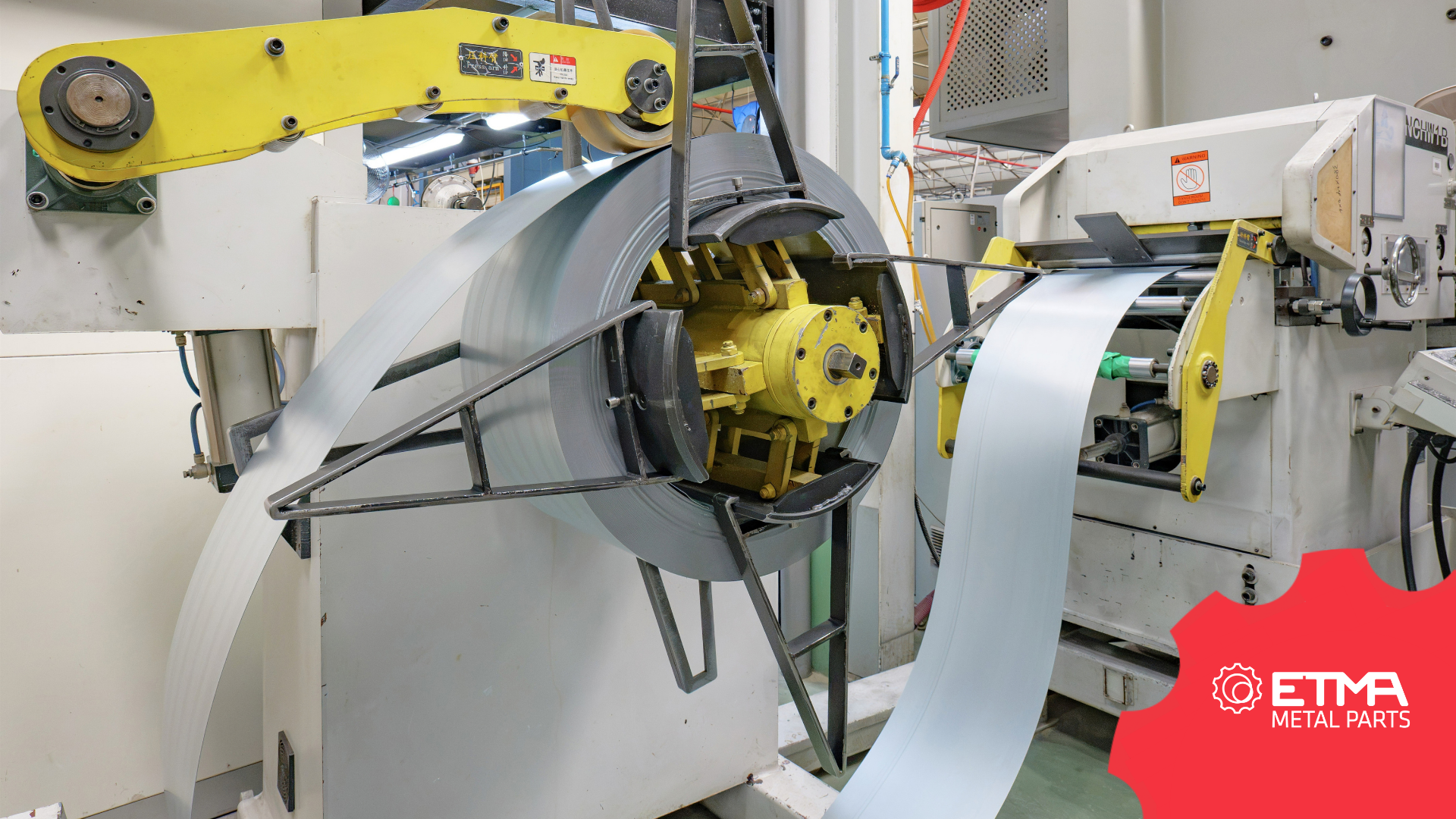
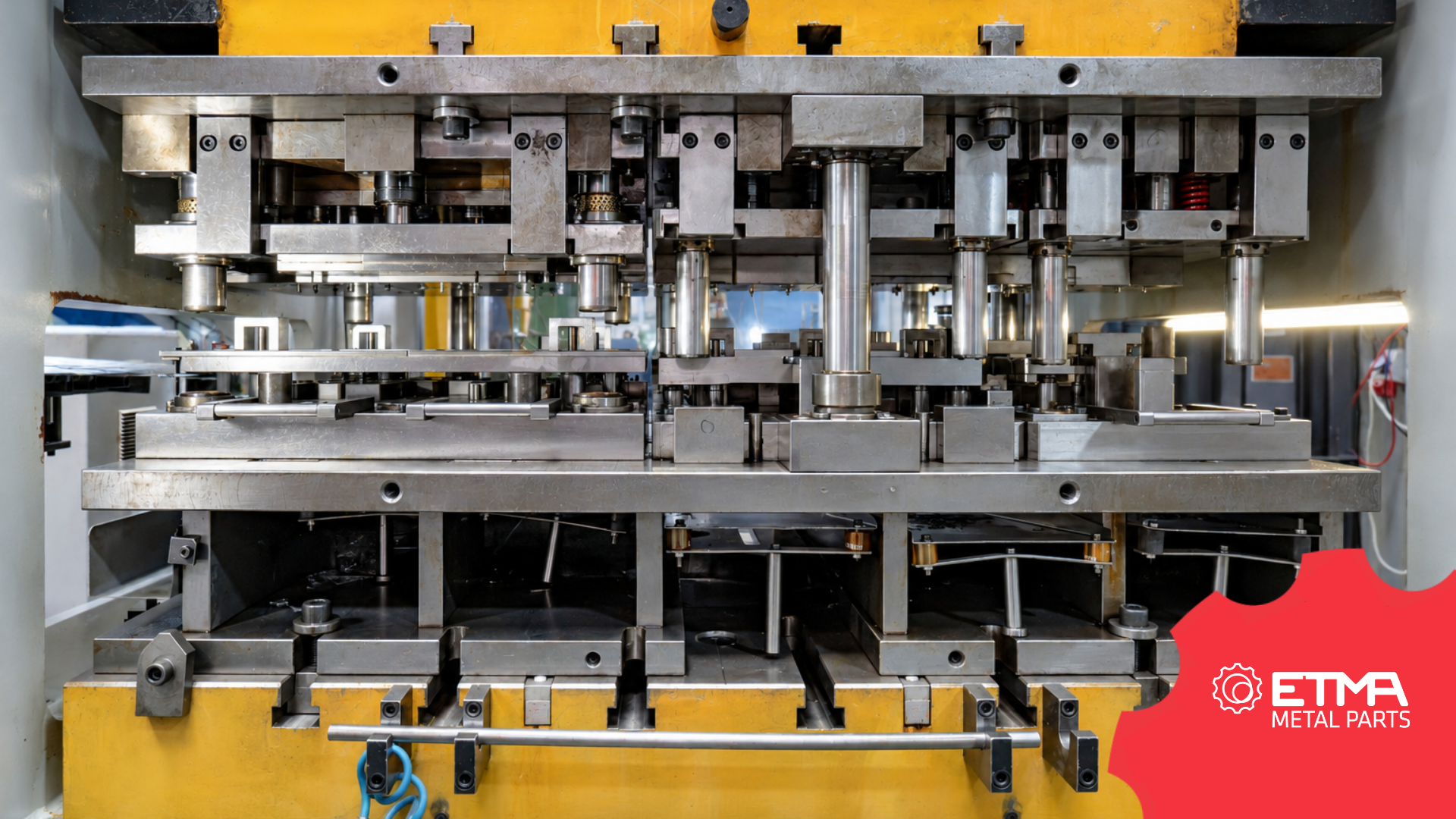
In this process, the raw material, usually fed as strip from a coil, advances progressively through the different stations of the tool. Each station performs an operation — cutting, bending or forming — and, as the strip travels through the tool, the part takes on its final geometry.
The efficiency of this solution comes from integrating the different operations into a continuous production cycle. However, achieving high production rates depends on more than press speed alone. The distribution of operations throughout the tool, the behaviour of the raw material at each stage and the ability to maintain the component’s dimensional stability all affect overall process performance.
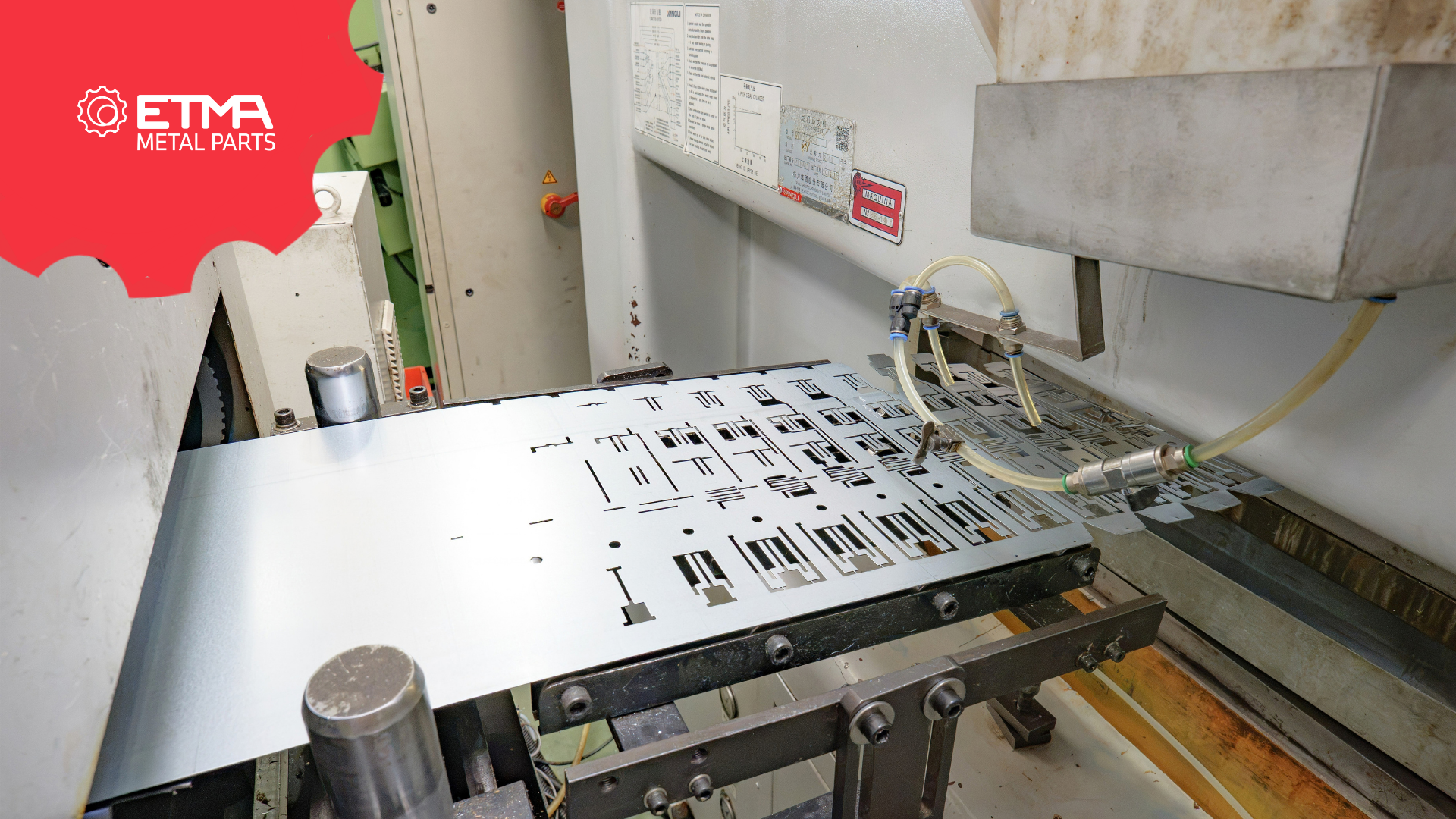
For this reason, a progressive tool should be seen as more than a means of producing a particular geometry. It also embodies much of the strategy developed to make that geometry consistently suitable for industrial production.
AUTOMATIC FORMING: A DIFFERENT ARCHITECTURE FOR DEMANDING GEOMETRIES
Some components require a different approach because of their geometry or forming sequence. This is where automatic forming can open up further possibilities for process development.
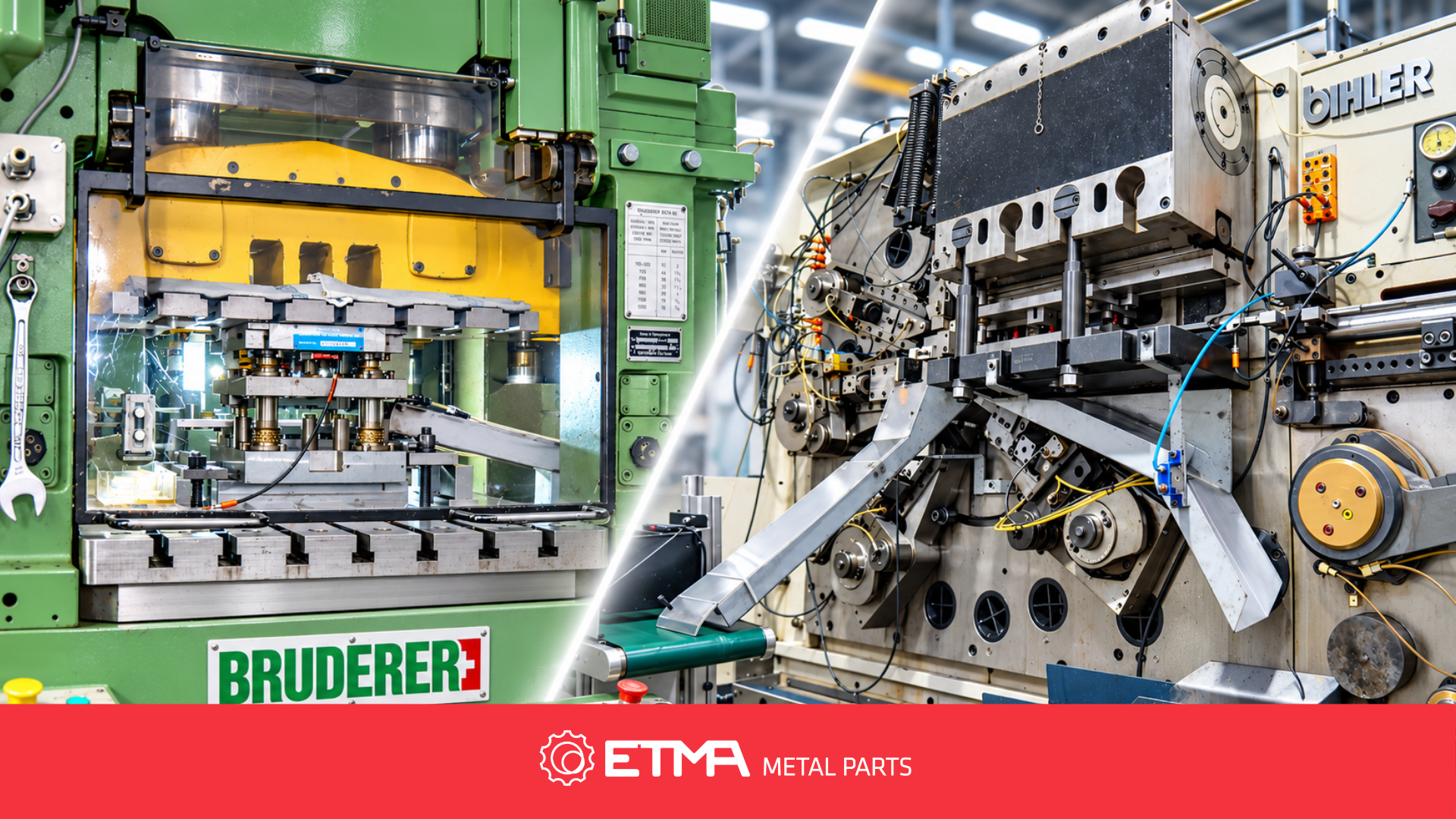
On the Bihler machines used by ETMA, cutting and bending operations are arranged differently from those in progressive stamping, with dedicated areas for cutting and others for bending. This configuration allows tool development and the sequence of operations to be adapted to the specific characteristics of certain components.
Springs, contacts, connectors, clips, terminals, circuits and bushes are examples of parts that can benefit from the possibilities offered by this technology.
The difference between the two processes should not, however, be reduced to the apparent complexity of the geometry. A more complex part does not automatically call for automatic forming, just as a simpler geometry does not, in itself, determine the use of progressive stamping. Factors such as the cutting and/or stamping force required and the strip width are very important when deciding between the two processes. The choice depends on how all the project variables interact and which production architecture can deliver the best results.
This is precisely why the decision requires process knowledge, as well as access to the technology.
TOOLING TURNS AN ENGINEERING DECISION INTO AN INDUSTRIAL PROCESS
Selecting the technology is only part of the answer. For the proposed solution to be reproduced in industrial production, a tool must be developed that can carry out each operation under the specified conditions and maintain that performance throughout production.
This is where the relationship between engineering, tool development and manufacturing capability becomes particularly important.
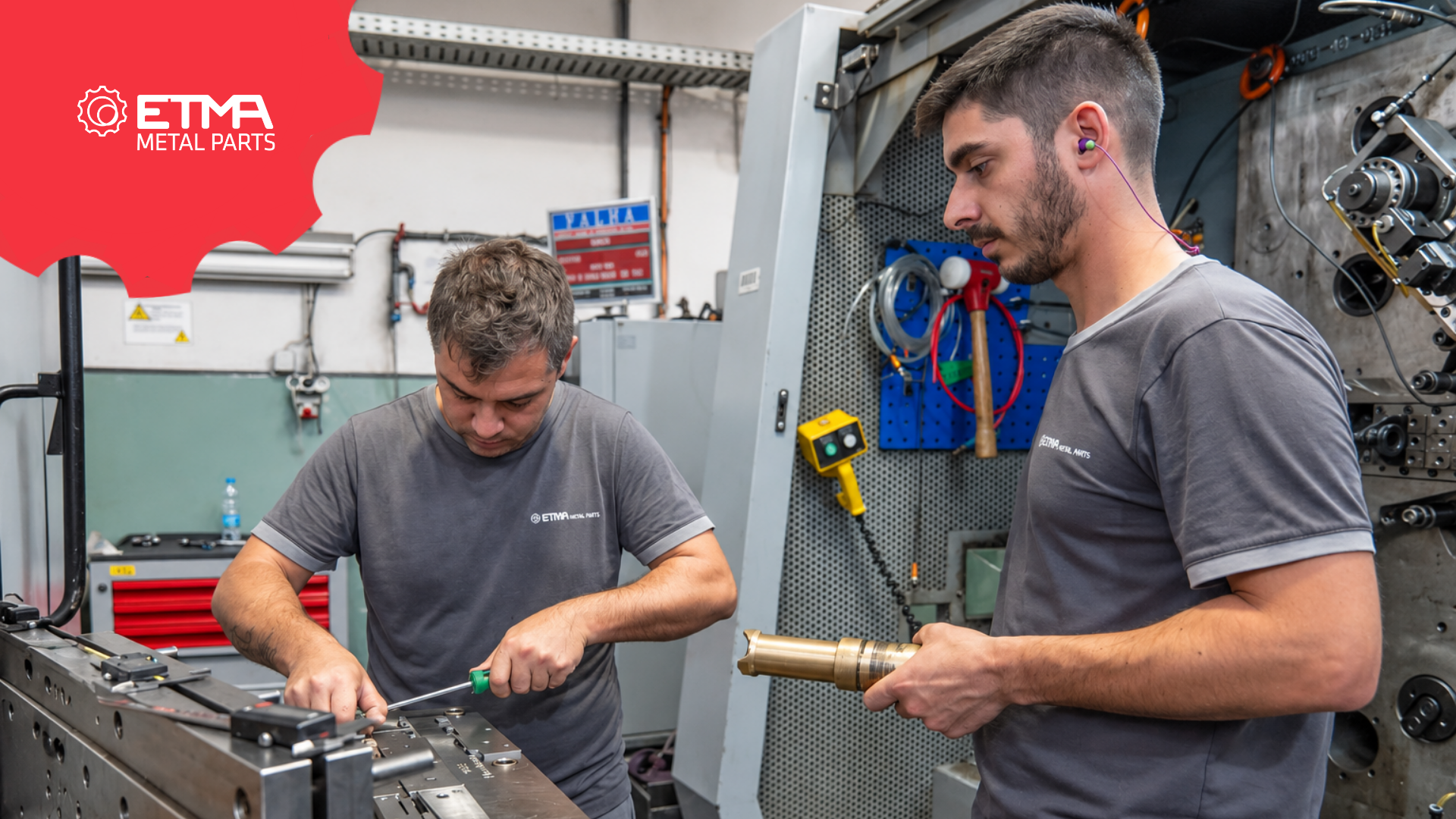
At ETMA, in-house tool development and manufacture allow this relationship to be managed from the earliest stages of a project. The company develops progressive tools for eccentric and high-speed presses, as well as forming tools for Bihler machines, taking into account part geometry, the sequence of operations, raw material characteristics, dimensional requirements and productivity targets.
This capability allows certain issues to be addressed before production begins, while there is still scope to optimise the solution. Analysis of the part and the process can lead to adjustments that simplify operations, improve production stability or make industrialisation more efficient, without compromising the component’s intended function.
In this sense, a stamping or automatic forming solution begins long before the tool is fitted to the machine: it begins with how the part is analysed and the process is designed.
FROM THE FIRST CONFORMING PART TO REPEATABILITY IN SERIES PRODUCTION
Validating a part demonstrates that the solution can produce the intended result. In series production, however, the real challenge is to reproduce that result consistently.
Process stability, tool robustness, dimensional control and repeatability therefore become central to the manufacturing solution. As production rates and volumes increase, small variations can become more significant, making it essential to control the factors that may influence process behaviour over time.
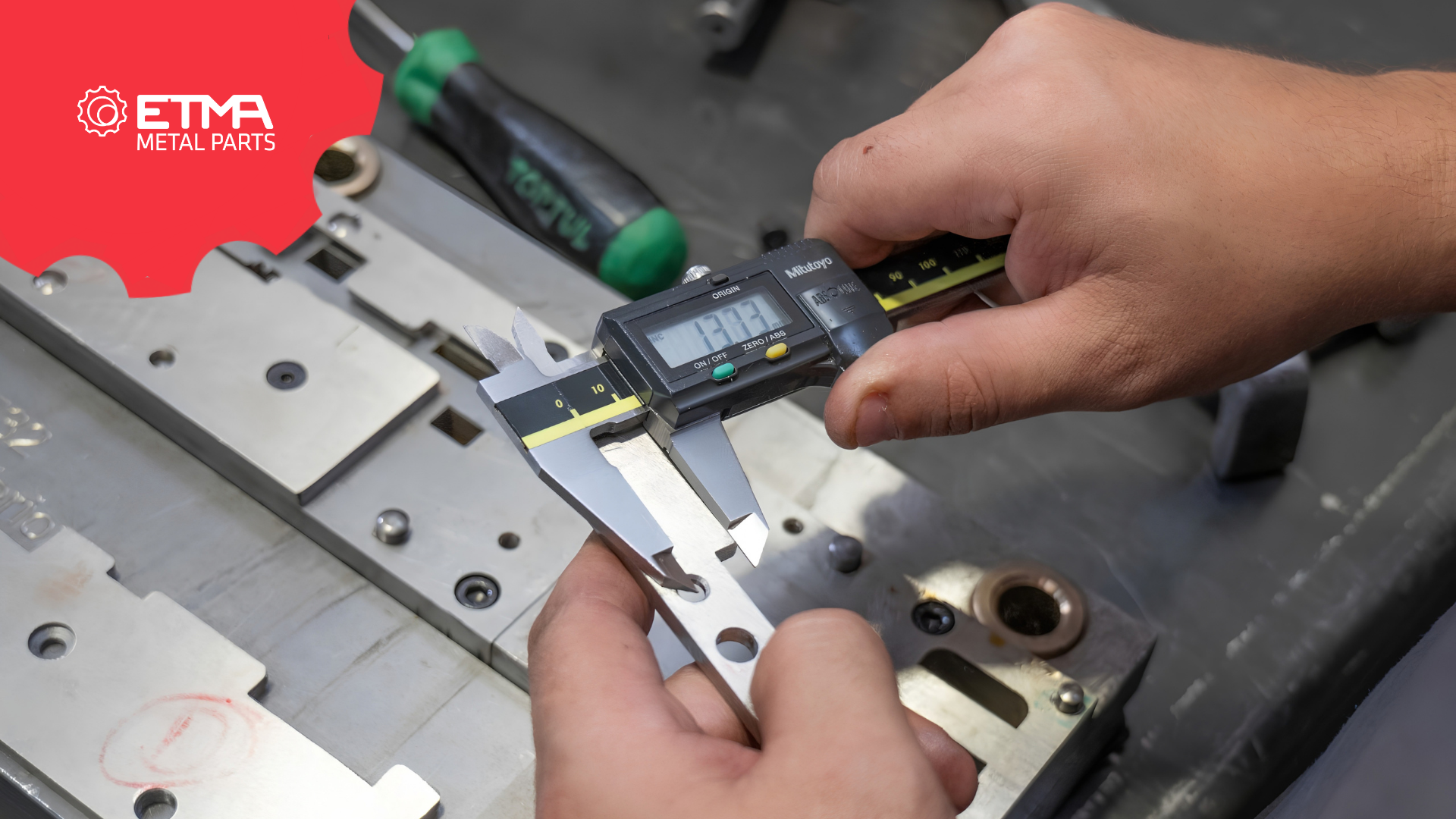
This perspective also changes the way quality is viewed. Rather than focusing solely on inspection of the finished component, quality is built in earlier: during geometry analysis, production sequence definition, tool development and process stabilisation.
Series production means more than producing greater quantities. It means being able to reproduce, in a controlled way, what was specified at the design stage.
SO, WHAT DETERMINES THE CHOICE?
The answer does not lie in a single characteristic of the part, or in a prior preference for a particular technology.
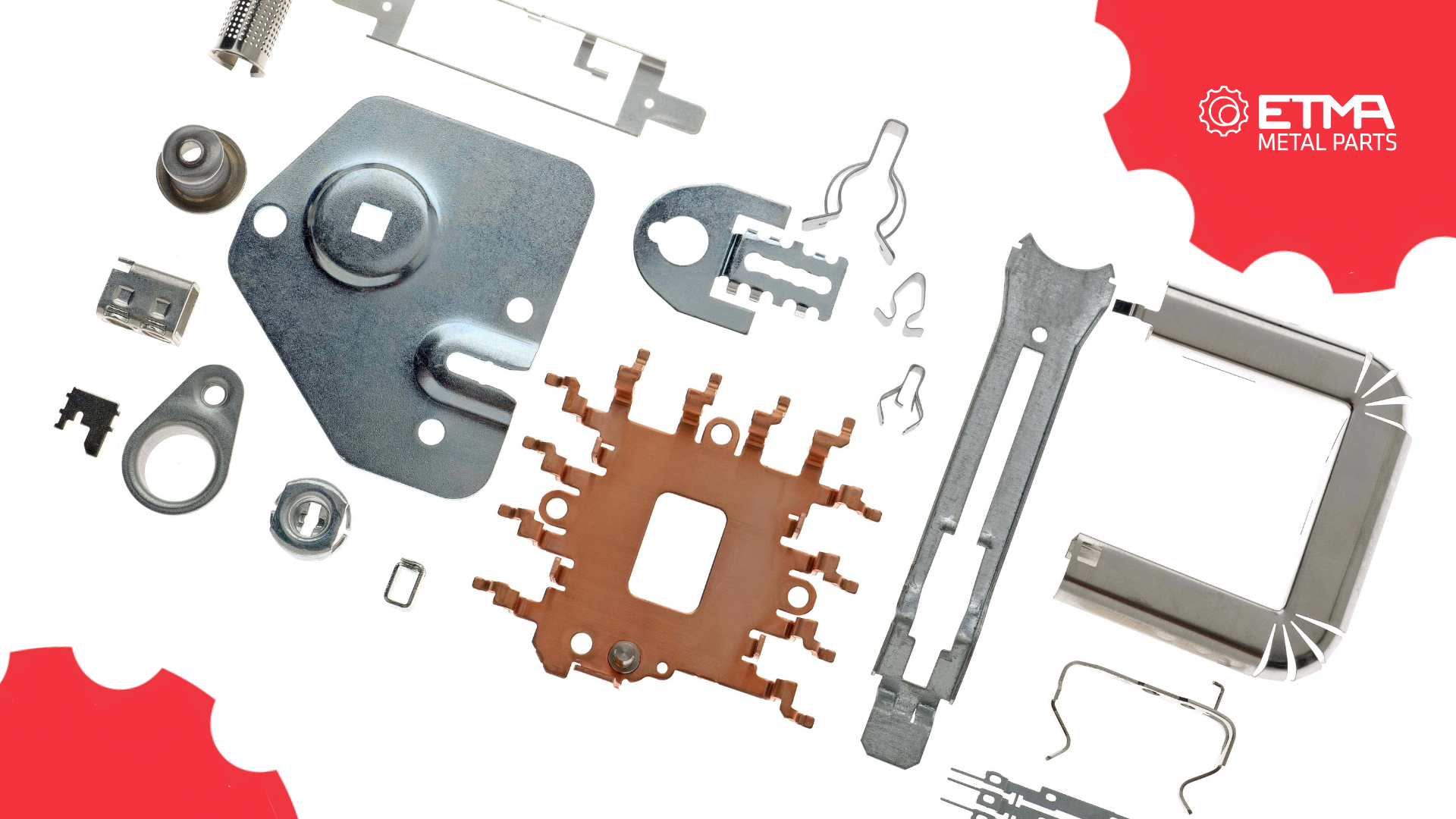
The choice between progressive stamping and automatic forming results from a combined analysis of the component’s geometry, the operations required to achieve it, the raw material and its thickness, the specified tolerances, the target production rate and the planned production volume.
In some projects, progressive stamping allows successive operations to be efficiently integrated into a single tool and meets the demands of high-rate production. In others, the architecture offered by automatic forming makes it possible to organise particularly complex forming sequences and develop a solution better suited to the component’s characteristics.
Other factors, such as tool maintenance and adjustment, are decisive when choosing between the two processes. In this respect, automatic forming is the more straightforward option.
It is precisely at this stage that accumulated experience becomes most valuable. Knowledge of different technologies makes it possible to produce a part; understanding the factors that govern each one makes it possible to determine how that part should be produced.
A DECISION INTEGRATED INTO THE COMPONENT’S PRODUCTION ROUTE
With over 85 years of experience in Stamping and Automatic Forming, ETMA combines eccentric and precision high-speed presses, Bihler automatic forming machines and in-house tool development and manufacturing capability.
This capability enables the manufacture of components in a range of raw materials, including steel, stainless steel, brass, aluminium, copper and bronze, as well as sheet metal parts up to approximately 3 mm thick and 400 mm wide.
However, defining the stamping or automatic forming process may represent only one stage in the component’s production route. Depending on each project’s requirements, integration with other capabilities within ETMA’s 10 Integrated Production Processes allows production to continue through complementary operations, supporting the different stages through to the finished component.
This is the context in which process selection takes on a broader dimension. It is not simply a matter of choosing between progressive stamping and automatic forming, but of finding the combination of process, tooling and technical expertise that can turn a part’s requirements into a robust industrial solution.
Ultimately, the most suitable technology is not necessarily the most complex.
It is the one that meets the specific requirements of each project most consistently and efficiently.
DO YOU HAVE A PROJECT THAT REQUIRES A STAMPING OR AUTOMATIC FORMING SOLUTION?
At ETMA, every project begins with an analysis of the part’s requirements and production conditions to identify the most suitable solution for its industrialisation.
Share your project with us and challenge our team to find the best way to turn it into a product.